
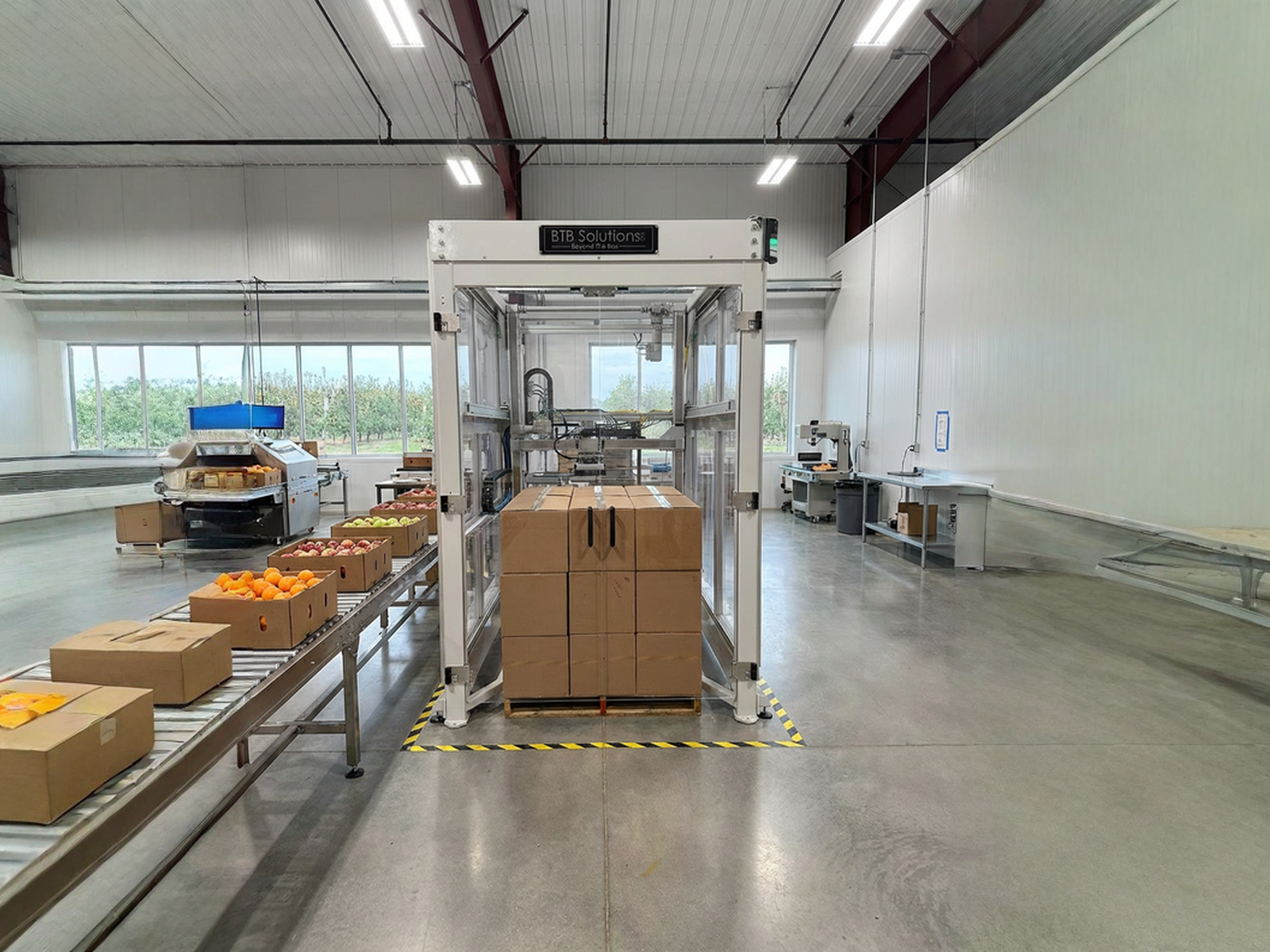
Mobile Palletizer | Compact Palletizing for Tight Spaces
BTB Solutions
A Mobile, Compact Palletizer for Real-World Production Floors
Not every operation has the space, infrastructure, or layout for a large fixed palletizing system. A mobile or compact palletizer can be a practical way to add automation where space is tight, deployment needs to stay simple, or flexibility matters.
Small-footprint automation
Strong fit for tight spaces and existing lines
Easier path into palletizing automation
Flexible deployment with practical setup
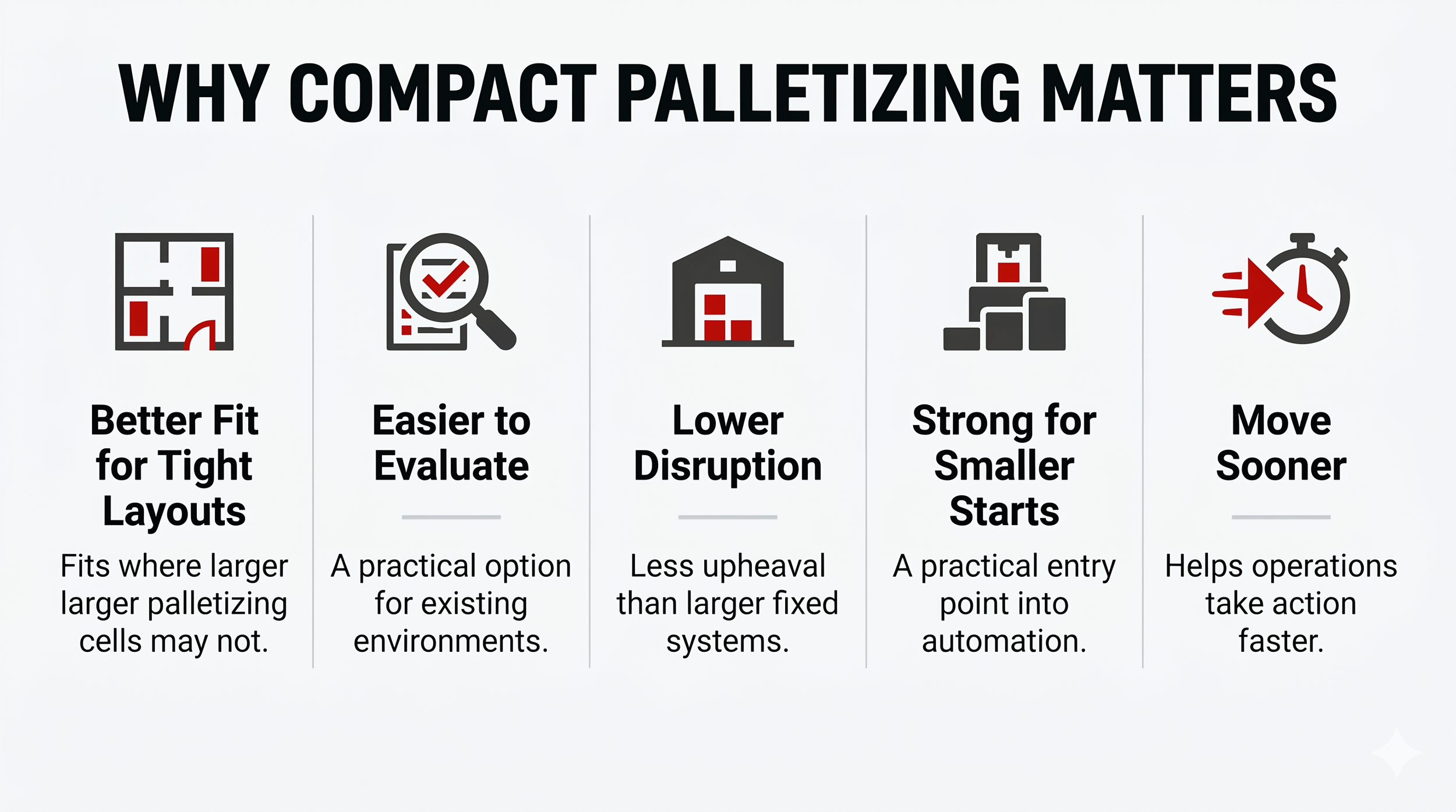
Why Compact Palletizing Matters
Many operations want the benefits of palletizing automation but assume they need more space, more infrastructure, or a more disruptive installation than they actually do.
Compact palletizing changes that equation.
For operations with limited floor space, existing line constraints, or a need for a more flexible approach, a smaller-footprint system can create a practical path into automation without forcing a major facility overhaul.
It is not about shrinking the idea of automation. It is about making automation fit the reality of the operation.
Better fit for tight production layouts
Easier to evaluate in existing environments
Lower disruption than larger fixed systems
Stronger fit for operations starting smaller
Practical way to move into automation sooner
When a Mobile or Compact Palletizer Is the Better Fit
This style of palletizing system can be especially valuable when flexibility, space, and simplicity matter as much as throughput.
Tight Floor Space
When the operation does not have room for a larger fixed palletizing cell, a compact system can create a more realistic and more usable automation path.
Existing Production Lines
When the goal is to add automation into an already functioning layout, a mobile or small-footprint solution may fit far more naturally than a larger system that requires major changes to the facility.
Lower-Barrier Entry Into Automation
Some operations want to reduce manual palletizing and improve consistency, but need a starting point that feels practical and manageable. A compact solution can often provide that first step.
Flexible Deployment Needs
When workflows shift, floor space is limited, or the operation values adaptability, a more mobile palletizing approach can create meaningful operational advantages.
Built for Operations That Need Practical Automation
BTB’s approach to compact palletizing is centered on real-world usability.
That means understanding the line, the space, the product flow, and the actual constraints before recommending a path forward. The goal is not just to fit automation into a facility. It is to make sure the automation fits the operation in a way that is practical, manageable, and commercially sensible.
For companies that need palletizing capability without unnecessary complexity, that approach matters.
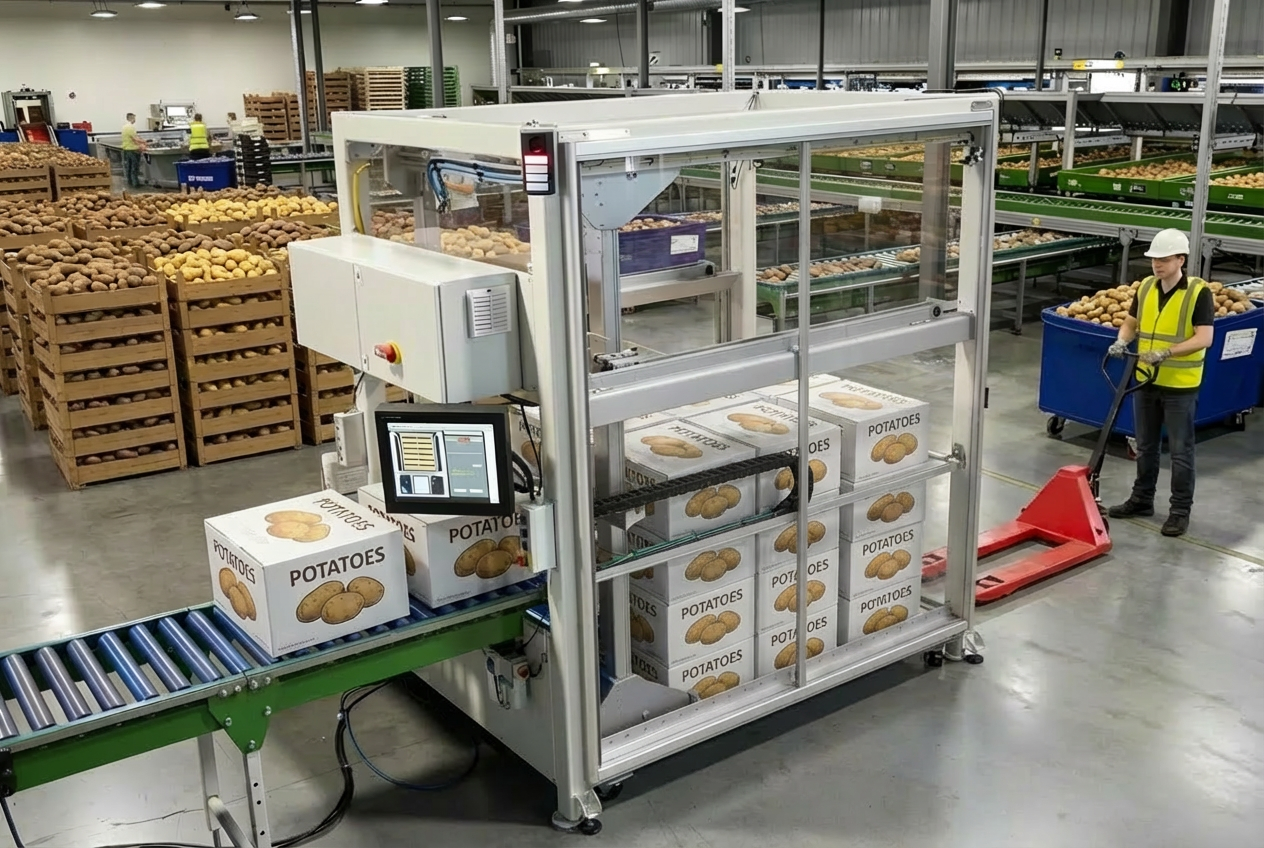
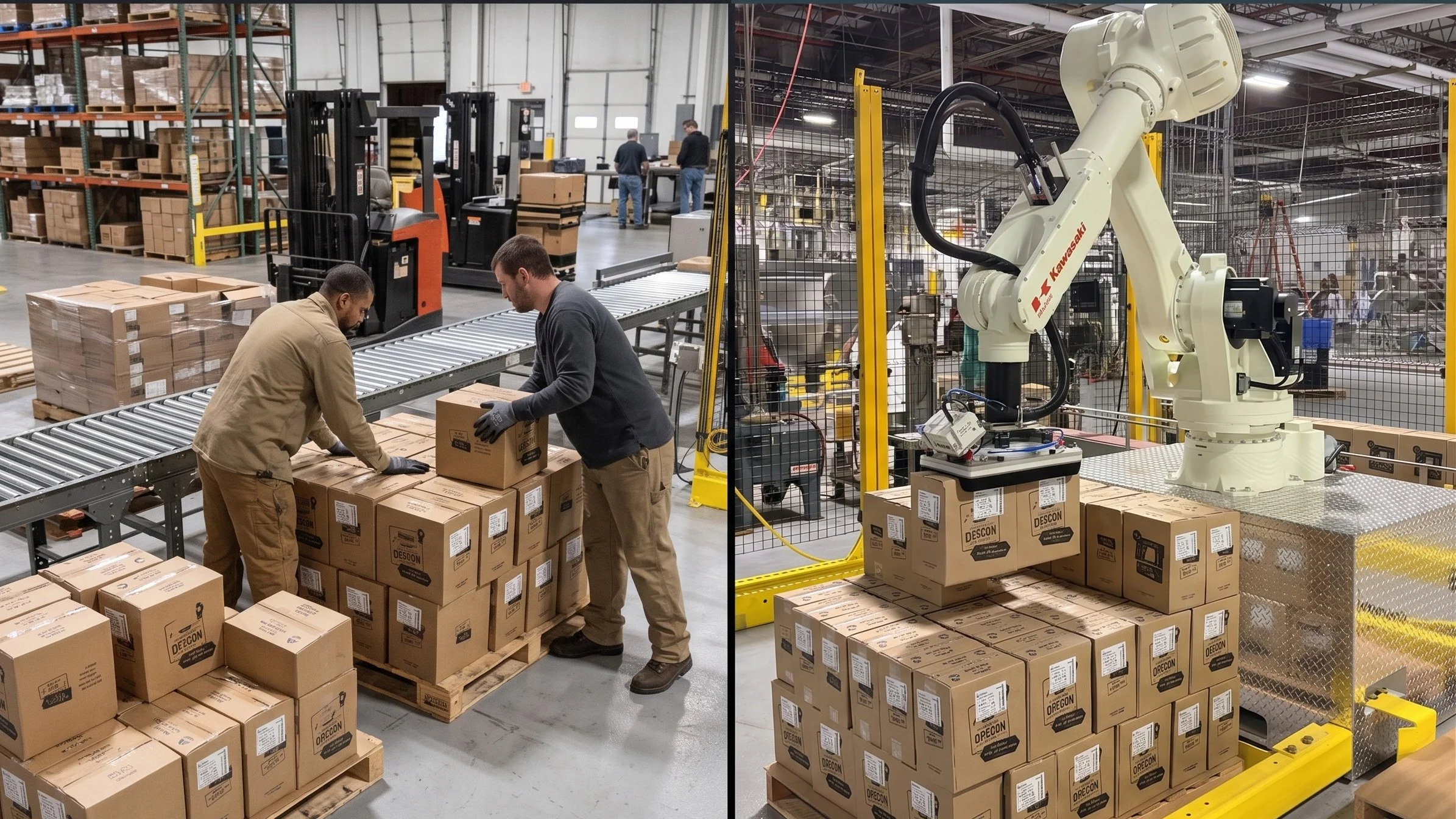
A Compact System Can Still Solve Real End-of-Line Problems
A smaller-footprint palletizing system can still make a meaningful difference where it matters most.
Reduce reliance on repetitive manual palletizing
Improve consistency at end of line
Add capability without requiring a large system footprint
Create a more manageable automation path for smaller or constrained operations
Support operations that need flexibility more than overbuilt complexity
Small Footprint Does Not Mean Small Value
A compact palletizer is not simply a smaller machine. In the right environment, it is the better solution.
The value comes from fit. A system that works within the space, power, and layout realities of the operation can often create a more practical and more successful automation path than a larger system that introduces unnecessary complexity.
For many facilities, the best palletizing solution is not the biggest or most complex one. It is the one that solves the problem while fitting the way the operation actually works.
Built around real production constraints
Easier to place within existing operations
Practical for facilities with limited space
Can reduce the barrier to starting automation
Helps match the system to the operation, not the other way around
The UNO Palletizer
For operations looking for a compact, mobile palletizing solution, UNO is often the right place to start.
UNO is designed to lower the barrier to palletizing automation. Its compact footprint, practical power requirements, and flexible deployment make it a strong fit for operations that need a smaller, more accessible palletizing solution.
It is especially well suited to facilities where floor space is limited, infrastructure changes are not desirable, or a simpler path into automation makes more sense than installing a much larger system.
Talk With BTB About Compact Palletizing
If your operation needs palletizing automation but space, layout, or deployment constraints matter, a compact solution may be the right fit. Let’s talk through the application and see what makes sense.
Mobile & Compact Palletizer FAQ
What is a mobile palletizer?
A mobile palletizer is a palletizing system designed to offer more flexibility in how it fits within an operation. In practical terms, that often means a smaller footprint, easier deployment, and a better fit for changing layouts or tighter spaces.
When does a compact palletizer make sense?
A compact palletizer often makes sense when floor space is limited, the operation wants to add automation to an existing line, or a lower-barrier entry into palletizing automation is the preferred path.
Is a small-footprint palletizer right for existing lines?
In many cases, yes. Small-footprint systems can be especially valuable when the goal is to add palletizing without requiring major facility changes or a large fixed automation cell.
How is UNO different from a larger palletizing system?
UNO is designed to be a more compact, accessible palletizing solution. Larger systems may be the better fit for higher-throughput or more complex needs, but UNO is often a strong option when space, simplicity, and flexibility matter most.
Can a compact palletizer still handle real production needs?
Yes. The right compact palletizer can solve real end-of-line challenges when matched appropriately to the operation, product flow, and throughput requirements.