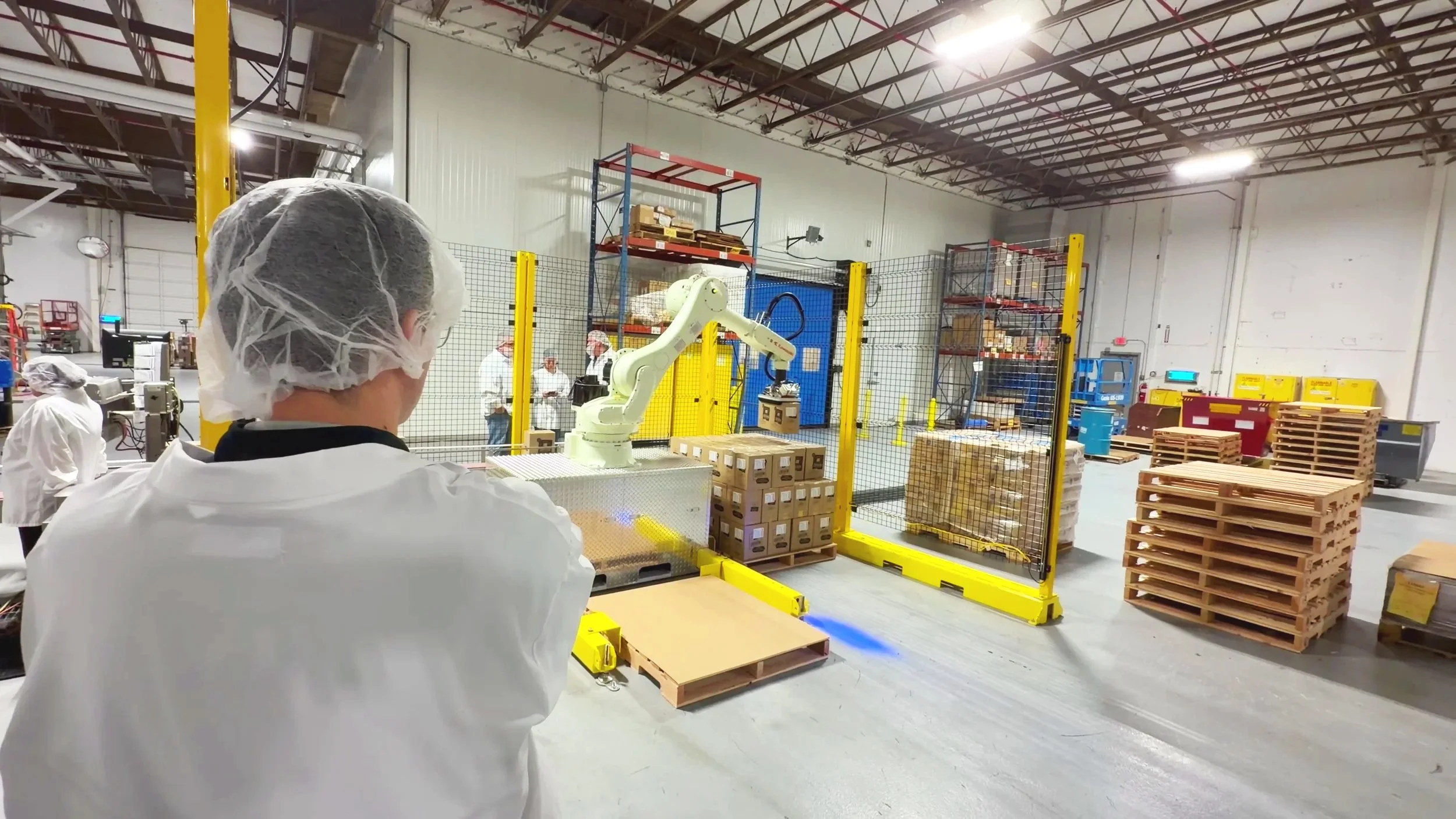
Walk into most production facilities and you’ll see the same thing at the end of the line.
Some version of manual palletizing.
Boxes coming down the conveyor.
Someone stacking.
Maybe two people during peak.
It works.
Until it doesn’t.
That’s usually where the comparison between manual vs automated palletizing starts to matter — not when things are running smoothly, but when volume, labor, or consistency gets tested.
The Reality of Manual Palletizing
Manual palletizing is simple by design.
No programming.
No integration.
No upfront capital decision.
That’s why most operations start there.
But over time, the tradeoffs become harder to ignore.
Where manual palletizing starts to show strain:
Labor becomes harder to staff consistently
Overtime increases during peak demand
Throughput fluctuates based on pace and fatigue
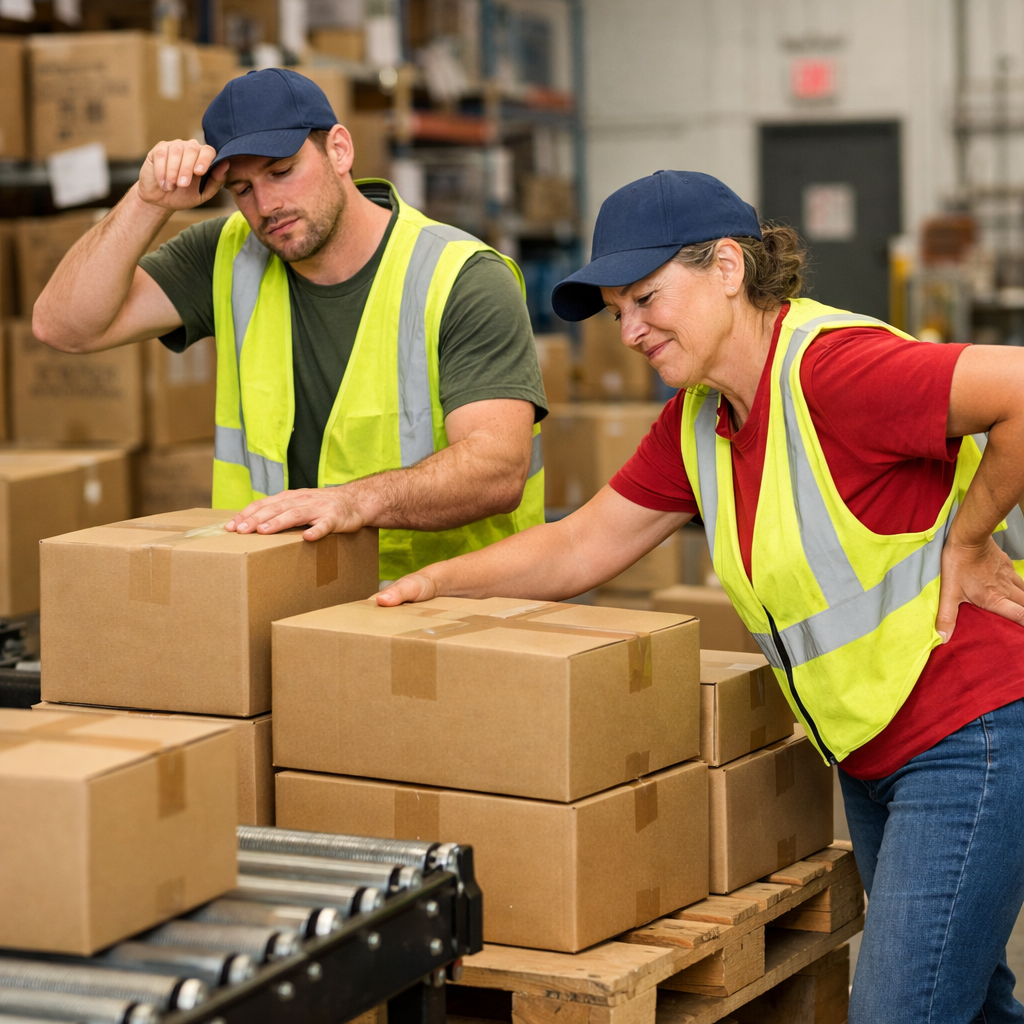
Injury risk rises with repetitive lifting
Pallet consistency varies shift to shift
None of these issues happen all at once.
They build slowly — and then show up all at once when demand increases.
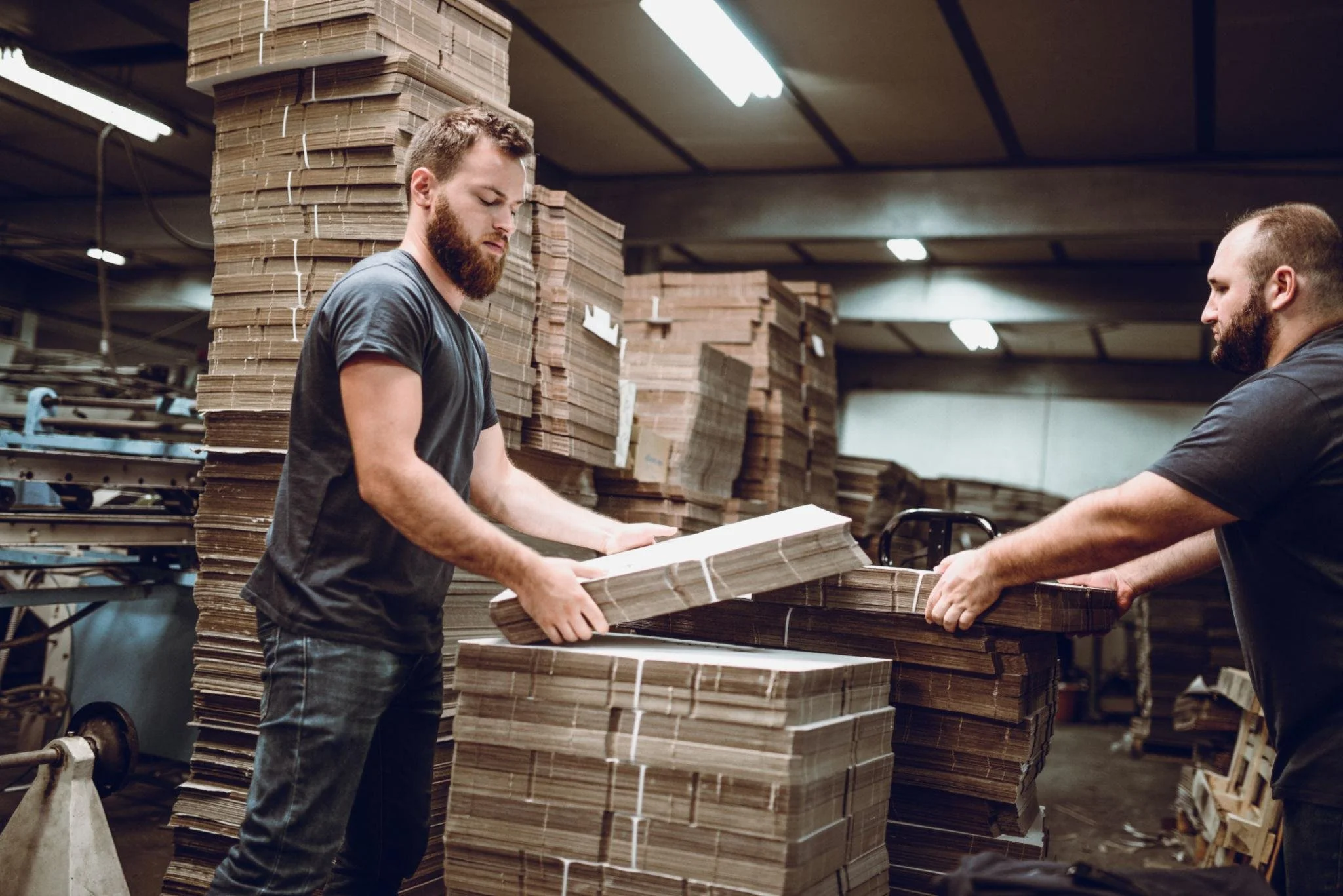
Two workers getting ready for their shift of manual palletizing.
What Automated Palletizing Actually Changes
Automated palletizing doesn’t change your product or your upstream process.
It changes how the final stage behaves.
Instead of:
Variable pace
Manual intervention
Reactive adjustments
You get:
Consistent cycle times
Predictable output
Stable end-of-line flow
That shift has a ripple effect across the entire operation.
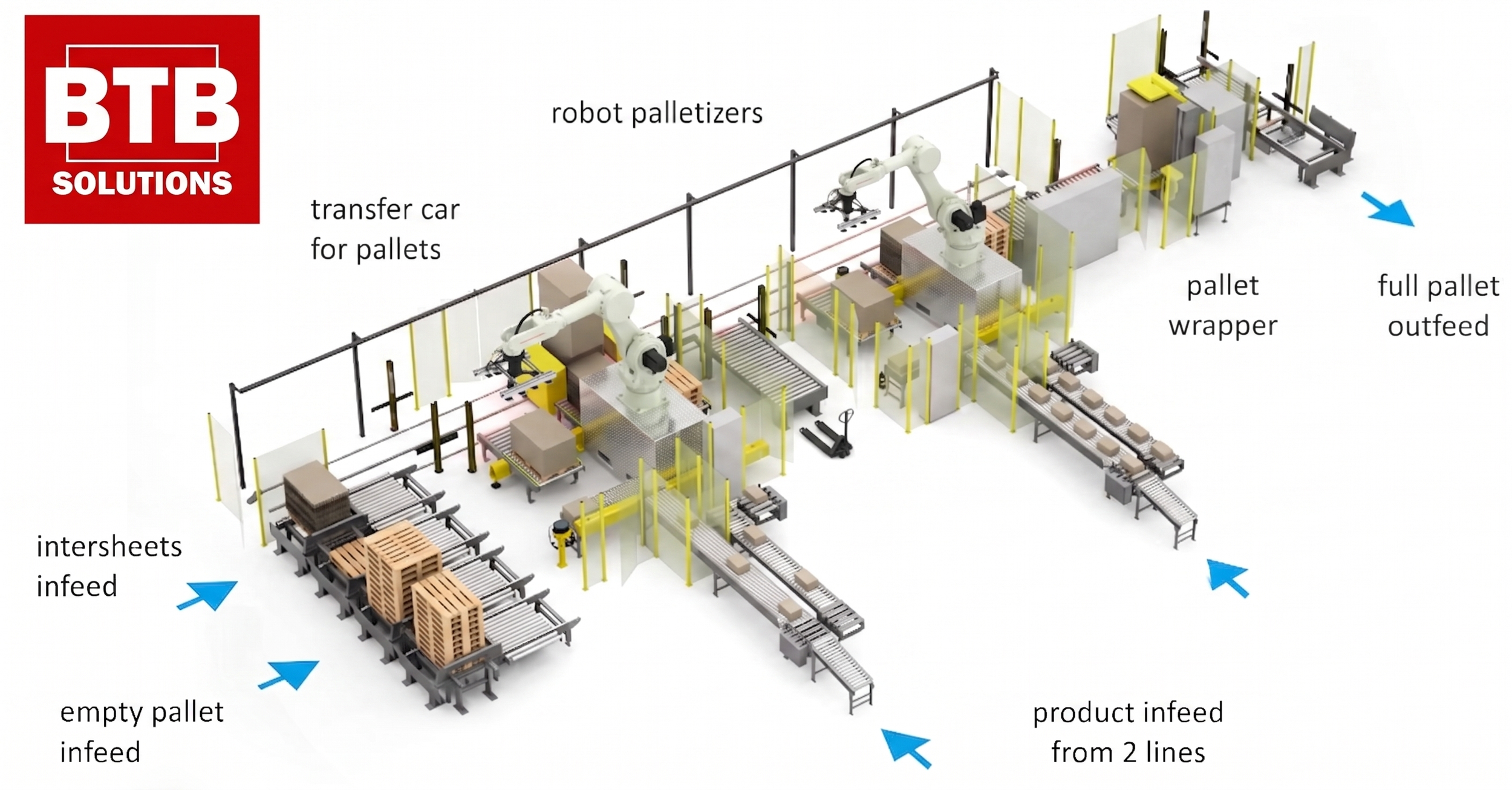
Cost Comparison: Manual vs Automated Palletizing
This is where most conversations start — and where they’re often oversimplified.
Manual palletizing looks inexpensive because the costs are spread out.
Automated palletizing looks expensive because it’s concentrated upfront.
But the real comparison is operational.
Manual palletizing cost factors:
Labor per shift (often 2–4 workers)
Fully burdened wages (taxes, benefits, overtime)
Turnover and retraining
Injury-related costs
Supervisory time managing instability
Automated palletizing cost factors:
System investment (purchase, lease, or rental)
Integration and setup
Ongoing support and maintenance
The difference is this:
Manual costs scale with volume.
Automation stabilizes as volume increases.
That’s why ROI often shows up faster than expected — especially in operations running multiple shifts or dealing with seasonal peaks.
Risk Comparison: Labor vs System Stability
Risk doesn’t always show up in spreadsheets.
But it shows up in operations.
Manual palletizing risk:
Labor call-outs during critical shifts
Fatigue-related mistakes
Inconsistent pallet builds
Increased injury exposure
Dependence on key individuals
Automated palletizing risk:
Equipment downtime (mitigated with support and redundancy)
Learning curve during implementation
The difference is predictability.
Manual systems rely on people maintaining pace.
Automated systems rely on engineered consistency.
Performance Comparison: Throughput and Consistency
This is where the gap becomes most visible.
Manual palletizing:
Throughput tied to human pace
Slows under fatigue or long shifts
Requires adjustment during spikes
Often becomes the bottleneck
Automated palletizing:
Fixed, repeatable cycle times
Maintains output across shifts
Handles sustained volume more effectively
Removes end-of-line variability
In many facilities, palletizing isn’t broken.
It just can’t keep up.
And that’s enough to limit the entire line.
When Does Automation Start to Make Sense?
Not every operation needs automation immediately.
But there are clear signals:
You’re adding labor just to keep up at the end of the line
Overtime is becoming routine, not occasional
Palletizing is slowing upstream processes
Staffing is becoming unpredictable
Output is inconsistent shift to shift
At that point, the conversation shifts from:
“Can we keep doing this manually?”
to:
“What’s it costing us not to change?”
Not All Automation Looks the Same
One of the biggest misconceptions is that automation means a full system overhaul.
In reality, most operations start by stabilizing one point in the process.
For palletizing, that often means deploying a system that fits:
Available space
Required throughput
Level of flexibility needed
Compact systems like UNO are often used where space and simplicity matter.
Higher-throughput systems like REAPR are used where volume and speed are the priority.
In many cases — especially for seasonal or growing operations — rental or lease options make it possible to move into automation without a large upfront commitment.
The Real Difference Isn’t Cost — It’s Control
On paper, manual palletizing can look manageable.
In practice, it introduces variability at the exact point where consistency matters most.
Automated palletizing doesn’t just reduce labor.
It gives you control over:
Output
Pace
Consistency
Risk
And that control shows up everywhere else in the operation.
Final Thought
Manual palletizing works — until the system around it starts demanding more.
More volume.
More consistency.
More reliability.
At that point, the comparison isn’t theoretical anymore.
It’s operational.
And in most cases, the question becomes:
Is your palletizing process keeping up with your operation — or setting the limit for it?